RAF’s early fighter — Blériot Experimental BE-2C
The Blériot Experimental BE-2C was Britain’s entry fighter in 1914, the beginning of WW I. The RAF aircraft was innovative with true ailerons, as opposed to the Wright’s wing warping philosophy, and staggered wings. The aircraft was stable and easy to fly — precisely wrong for a fighter as things turned out since stability results in slow turns. The German Air Force soon deployed fighters as we’ve come to know them but the BE-2C soldiered on in reconnaissance and light bombing roles where the rear gun position was more than useful — as well as interception duty against dirigibles over Great Britain.
The BE-2C pictured in this post is in the U.S. Army Aviation Museum (paste the name into the search window to find more about the museum and other exhibits there) and is a replica constructed by Mr. Gerold Burr of Nova Scotia in 1980.

The Blériot Experimental BE-2C as flown by the RAF on display in the U.S. Army Aviation Museum — photo by Joseph May
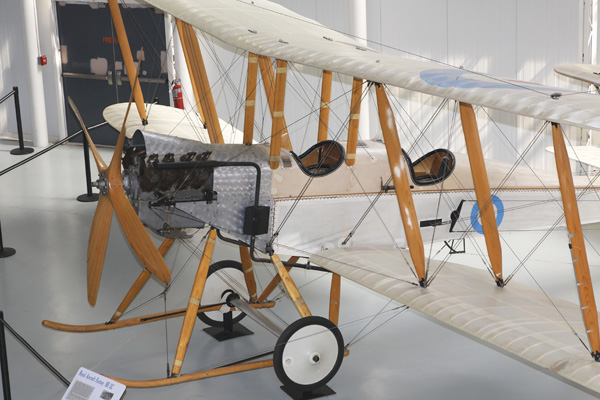
The BE-2C was crewed by two positioned in tandem — photo by Joseph May

This view best illustrates the staggered wings and ailerons in each wing, innovations at the time — photo by Joseph May

Skids to help prevent propeller damage in the event of tipping over — photo by Joseph May


No comments:
Post a Comment